Hamburg, 17 June 2026 – Geopolitical uncertainty, decarbonisation, digitalisation and new energy efficiency requirements are fundamentally reshaping the maritime industry. At today’s joint press conference for SMM 2026, MS&D Conference & Expo and ALL ABOUT PORTS, leading representatives from industry, shipping the port sector and maritime organisations discussed the key challenges and opportunities facing the future of the industry. Participants agreed that the maritime transition can only succeed through closer collaboration across the sector. “The most exciting developments are currently emerging not within individual sectors, but at the intersections between them. It is there that we can see how the maritime industry is changing – and where it is heading. With SMM, MS&D Conference & Expo and ALL ABOUT PORTS, we are creating the framework in Hamburg to discuss these developments from different perspectives,” said Claus Ulrich Selbach, Vice President Exhibitions Maritime & Energy at Hamburg Messe und Congress.
While SMM puts the key future challenges facing the maritime industry centre stage, the MS&D Conference & Expo focuses on current issues in maritime security and defence. ALL ABOUT PORTS complements this portfolio by highlighting the role of ports as future hubs for energy, infrastructure and logistics. Ports are also increasingly at the centre of discussions about resilience, energy supply, data infrastructure and security. “Ports are no longer just places where ships load and unload cargo. They are becoming central hubs for energy, infrastructure, logistics and increasingly also for data and security. As strategic nodes where economic competitiveness, energy security, digital infrastructure and defence readiness intersect, ports must become more resilient, more connected and more innovative than ever before,” said Jens Meier, CEO of Hamburg Port Authority (HPA) and patron of ALL ABOUT PORTS. Topics on the ALL ABOUT PORTS agenda include the role of ports in the energy transition, the protection of critical infrastructure, the digitalisation and automation of port operations, as well as strategies for resilient supply chains and sustainable port development.
Maritime transformation becomes an industrial challenge
The demands on shipping continue to grow. Emissions must be reduced, processes digitalised and vessels operated more efficiently. The technologies required to achieve this are being developed by shipyards and maritime suppliers.
"Geopolitics are reshaping the maritime industry. New markets, new technologies - for the industry these are exciting times! Our technological edge here in Germany and Europe gives us huge opportunities for strong growth here and elsewhere. SMM is the place to watch it happen and be part of it,” said Dr Reinhard Lüken, Chief Executive Officer of the German Shipbuilding and Ocean Industries Association (VSM). According to Lüken, shipbuilding is now one of the most technology-intensive industries worldwide. Alternative propulsion systems, digital ship operations, automation, artificial intelligence and cyber resilience are becoming essential requirements for modern vessels. At the same time, competitiveness, technological sovereignty and innovation capacity are becoming increasingly important for Europe.
Energy efficiency and digitalisation shape the future
Energy efficiency is no longer merely a sustainability issue; it has become a key competitive factor. Digital applications, automation and data-driven processes help operators run vessels and fleets more efficiently while reducing operating costs. At the same time, the technologies required for maritime transformation are becoming increasingly complex and interconnected. To accelerate the development of new solutions and bring them into practical application more quickly, international collaboration across the entire maritime value chain is becoming increasingly important.
“The maritime industry is entering a period of profound technological change. Energy efficiency, digitalisation and automation are fundamentally transforming shipping and shipbuilding. At the same time, pressure is mounting to bring sustainable and high-performance solutions to market more quickly. The technologies required are too complex and the challenges too great for individual companies or regions to tackle alone. Progress depends on international collaboration, the exchange of expertise and the joint development of new solutions,” said Hauke Schlegel, Managing Director of VDMA Marine Equipment and Systems. According to Schlegel, the maritime supply industry plays a key role in this transformation. As the link between technology development, system integration and industrial implementation, it helps bring innovation into practical application. Platforms such as SMM foster international exchange and create the conditions needed to accelerate the transition from technological development to market-ready solutions.
From the perspective of international classification societies, geopolitical developments, regulation and technological innovation are also reshaping the framework for investment and fleet strategies.
“SMM comes at a very interesting time for the industry. We have seen first-hand the huge impact geopolitics can have on shipping - both on the commercial side and on the global regulatory order. On the regulatory front, this looks more like a speed bump than a brick wall, but it emphasises the importance of building flexibility into the decisions being made today. SMM is where the industry comes together to work through exactly these questions - and that makes Hamburg in September more important than ever,” said Rasmus Stute, Vice President and Area Manager Germany at DNV Maritime. According to Stute, shipowners today must navigate more regulatory requirements than ever before. At the same time, energy efficiency, digitalisation, artificial intelligence and new technologies are becoming increasingly important. Classification societies play a vital role in ensuring that innovation can be implemented safely while helping companies navigate an increasingly complex environment.
Resilience becomes a competitive factor for global supply chains
For shipowners, a key question is how to ensure reliable supply chains under increasingly challenging geopolitical conditions. Recent geopolitical crises and disruptions to major trade routes have demonstrated how closely security, economic performance and supply chain reliability are interconnected.
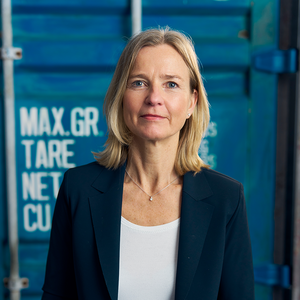
“From a shipowner’s perspective, innovation only creates value when it works in everyday operations. The technologies we need must improve efficiency, strengthen safety and support commercially sustainable decarbonisation. They should also make life and work on board easier for seafarers, who ultimately operate these systems every day. At the same time, recent geopolitical developments have shown that resilience has become a key competitive factor for global supply chains. This makes collaboration across the maritime industry more important than ever,” said Silke Lehmköster, Managing Director Fleet at Hapag-Lloyd AG.
The topics are converging
The discussions at the press conference showed how closely the key challenges facing the maritime industry are now interconnected – from energy efficiency and digitalisation to maritime security and the role of ports as hubs for energy, infrastructure and logistics.